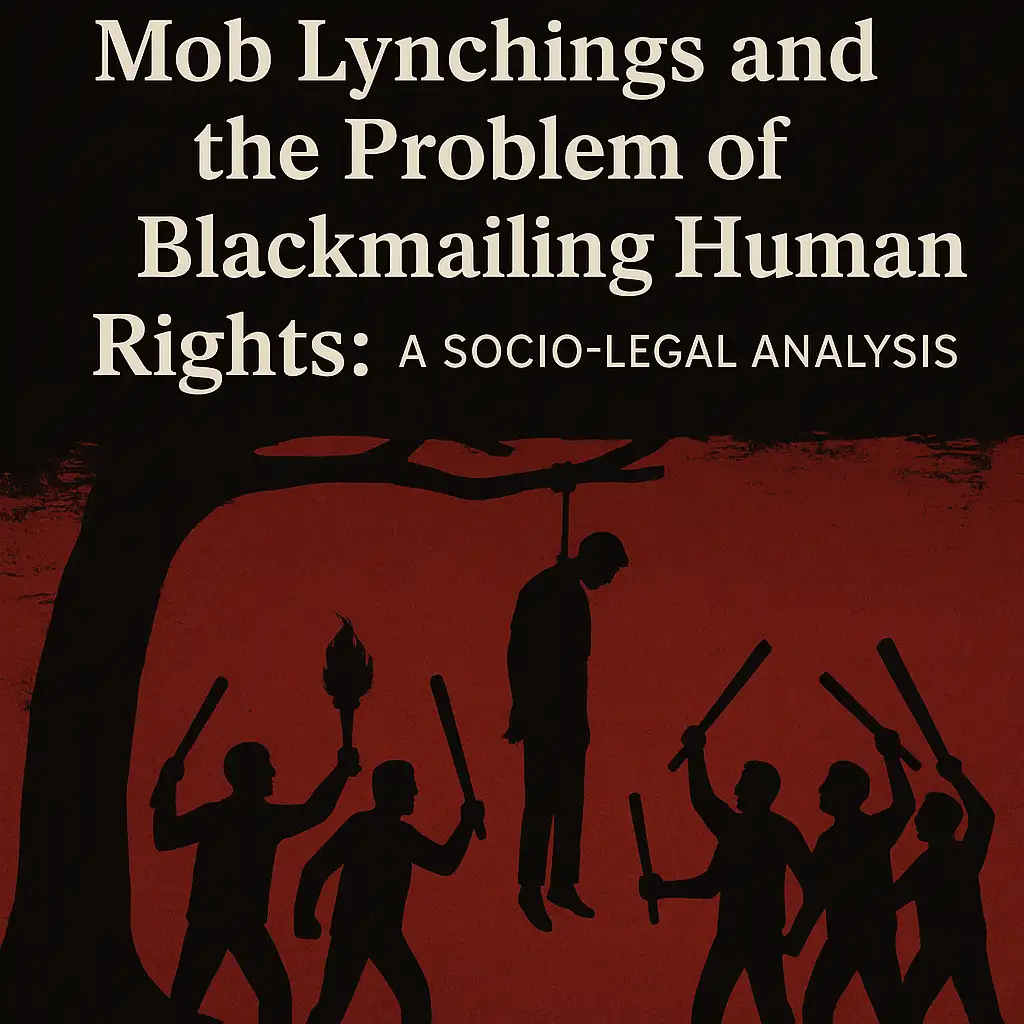
Mob Lynchings and the Problem of Blackmailing Human Rights: A Socio-Legal Analysis
Animesh Baidya
Institution: School of Law, Brainware University
Abstract
Mob lynching refers to violent, illegal killing by mobs of people without any legal trial. The actions are usually fueled by rumors, religious or caste hatred, and political motives. Such violence openly defies the power of the law and contravenes fundamental human rights such as the right to life, equality, and protection against discrimination. This paper analyzes mob lynching from the human rights context, tracing the ways and reasons why this practice takes place even when laws exist.
It pinpoints the inadequacies of institutions such as the police, judiciary, and government in avoiding and penalizing these crimes. The role of the media and social media is also traced with regard to disseminating hate or taking mobs to task. Salient cases are reviewed to reflect the lived experience and legislative lacunae. Though the Constitution and international conventions safeguard human rights, enforcement is lacking. The paper concludes with certain suggestions to streamline the legal system, police more effectively, enhance judicial action, and raise community consciousness. These measures are imperative to deliver justice, secure vulnerable sections, and uphold the rule of law in a democratic polity.
Keywords
Mob Lynching, Human Rights, Vigilantism, Communal Violence, Rule of Law
Introduction
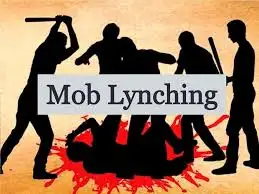
Mob lynching, once regarded as a sporadic and unusual act of violence, is now a common and alarming phenomenon in most democratic nations, particularly India. In contrast to other crimes perpetrated by individuals or small groups for personal motives, mob lynching is usually committed by large numbers of people taking the law into their own hands. Such groups usually justify their actions on the grounds of protecting morality, religion, or social order.[1] Common causes for such violence are allegations of cow killing, robbery, witchcraft, inter-faith relations, or circulating false information—all of which tend to be driven by prejudice, rumors, or communal hatred.
What is especially risky about mob lynching is that it cuts out the legal system altogether. Rather than report suspected criminal activity to the courts or police, mobs serve as judge, jury, and executioner. This totally negates the rule of law, the pillar of any democratic nation. It violates fundamental principles of justice, including the right to a fair trial, presumption of innocence, and safeguard against cruel or degrading treatment. It also imperils human dignity and equality since many victims come from marginalized groups who are targeted due to their religion, caste, or social position.[2]
The increase in mob lynching is an indication of deeper social problems, such as increasing intolerance, political polarization, social media spreading false information, and institutional distrust. In most instances, the reaction from the government and police has been tardy, biased, or non-existent. At times, political leaders even justify the perpetrators, which further encourages such acts.
Considering the grave implications of mob lynching on public safety and individual rights, this matter deserves immediate consideration by scholars, legislators, policymakers, and civil society. It is not a law and order issue—it is a human rights crisis that attacks the very essence of democratic values. Academic studies can assist in examining the causes and patterns, whereas policy action needs to emphasize enforcing legislation, providing rapid justice, raising public awareness, and punishing offenders.[3] A unified, robust response is necessary to safeguard vulnerable groups, reestablish public confidence in justice, and preserve the dignity and equality enshrined by national constitutions as well as international human rights systems.
Historical Context and Evolution
Mob lynching is traced back to the 19th and 18th centuries, especially in the United States, where lynching was applied as a forceful means of social control. In this time, lynching was a common practice to intimidate and oppress African Americans, most notably in the Southern states, after the emancipation of slavery. These acts were frequently public displays, committed with impunity, and indicated ingrained racial bias and the inability of law enforcement to ensure justice for every citizen.[4] The heritage of such violence created a lasting blemish on the American civil rights movement and underscored the risks of mob justice where it is abetted or tolerated by state institutions.
Today, although the word "lynching" still carries the connotation of extrajudicial murder by a mob, its targets and motivations have changed.[5] Today's lynchings tend to be aimed at minorities, oppressed groups, or accused criminals—frequently with no evidence or trial. What has not changed is the essence: the abuse of legal power by self-styled vigilantes based on hate, fear, or ignorance.
In India, the recent surge in the number of mob lynching cases is a worrisome trend. They are most often linked to religious or caste conflicts and target Muslims, Dalits, or tribal groups. Cow protection vigilantism is a common underlying factor in many of these incidents in which people are attacked on suspicion of carrying, consuming, or selling beef, which is holy to many Hindus.[6] Aside from religious reasons, a few lynchings are prompted by rumors being spread on social media, such as child abductions or theft, that quickly cause mass hysteria and violence.
This tidal wave of mob lynching in India is a symptom of deeper systemic flaws. There tends to be glaring insufficiency of police action at the right time, dilatory judicial proceedings, and, in some instances, political or social backing of the perpetrators.[7] These deficiencies are indicative of a deep degradation of constitutional safeguards, specifically the right to life, liberty, and equality.
In total, mob lynching has evolved from being a weapon of racial oppression in the past to a contemporary danger fueled by communal intolerance, misinformation, and ineffective governance.[8] Its persistence indicates an imperative for legal reform, institutional accountability, and social education to avoid the normalization of such collective violence and to ensure the ideals of justice and human rights.
Legal Structure and Human Rights Approach
Mob lynching constitutes a gross assault on basic human rights and constitutional protections. The Indian Constitution that is the crux of India's legal architecture provides a variety of rights directly violated in mob lynching instances. Article 14 ensures equality before the law and equal protection of the laws to all.[9] Under mob lynching attacks, this right is violated when victims, who frequently belong to marginalized groups, are deprived of legal protection and attacked out of prejudice or communal bias.
Article 21, perhaps the most essential provision, guarantees the right to life and liberty.[10] Mob lynching, by definition, is an extrajudicial killing resulting in the arbitrary deprivation of life, frequently in cruel and inhuman manner. These acts are done without the due process or fair trial, which directly contravenes this constitutional guarantee. Moreover, Article 19 that guarantees freedom of speech and expression is indirectly undermined as the victims or communities remain in fear of speaking out or having any dissident voice,[11] lest of facing mob violence and retaliation.
The Indian Penal Code (IPC) does offer legal remedy for mob violence-related acts under different sections, like for murder (Section 302), rioting (Section 147–148), unlawful assembly (Section 141), and criminal conspiracy (Section 120B).[12] Nonetheless, there isn't any legislation which defines and criminalizes mob lynching as a special criminal offense, which results in inconsistent enforcement of the law and poor accountability. It facilitates many of these perpetrators to remain unpunished, particularly where investigations are deficient or biased according to political or communal lines.[13]
From the international human rights perspective, India is a party to various multilateral treaties and agreements, notably the Universal Declaration of Human Rights (UDHR)[14] and the International Covenant on Civil and Political Rights (ICCPR). These instruments put importance on the responsibility of the state towards safeguarding people against random violence, ensuring the right to life, and keeping non-discrimination and equality principles in check.[15] India risks breaching its international obligations by failing to prevent or respond effectively to mob lynching.
In summary, though the Indian constitutional and legal systems recognize robust protections for human rights, the lack of a specific anti-lynching act and ineffectual enforcement systems leaves justice in tatters. There is an urgent call to make legal reforms targeting specifically mob lynching, and strengthening institutional accountability along with ensuring the rule of law.[16]
Causes and Mobilizers of Mob Violence
Mob violence, or lynching in its most frequent form, is not an event that takes place in a void. It results from a web of social, political, and institutional forces working together to establish a context under which such a crime not only happens but typically goes unpunished.[17] Included among the determinants are religious polarization, disinformation, institutional indifference, and political patronage.
Religious polarisation has emerged as a major trend in recent times. In most cases, mob lynchings are guided by sectarian worldviews that depict targeted religious or minority communities as dangers to national identity or cultural values. Such divisive thinking is typically emboldened around elections or social unrest times, when identity politics can be employed to polarise communities.[18] Consequently, people from marginalised communities—especially religious minorities—are regular targets of mob violence.
The quick spread of misinformation and fake news, particularly on social media platforms such as WhatsApp, Facebook, and Twitter, has also contributed to mob mentality.[19] Rumors of child abductions, cow killings, or inter-faith relationships can spread like wildfire in a matter of minutes, leading to panic and outrage. Several lynching cases have been directly linked to rumors spread on the internet, demonstrating how online platforms, left unregulated, can become vicious accelerators for violence.
Institutional lethargy—or inability or refusal of state machinery such as the police and local administration to respond quickly and in a fair manner—is yet another key precipitant. Law enforcement officers often arrive late to thwart a lynching, or they do not take the necessary legal measures against lynching perpetrators. In some instances, officials exhibit bias against victims, especially if they are from minority or oppressed groups. This lack of enforcing justice promotes additional instances of mob violence, as the aggressors believe they can do so with impunity.
Political patronage becomes an important factor. Certain mob groups are under the protection or covert sponsorship of political leadership or parties, which gives them a feeling of impunity.[20] When the authorities in power do not denounce such acts—or go further and justify them—it gives a dangerous signal that collective violence becomes acceptable on certain ideological or moral grounds.
Together, these factors contribute to a culture of normalized violence where the rule of law is overridden by mob sentiment. Addressing mob lynching requires confronting each of these causes head-on through legal reform, institutional accountability, and social awareness campaigns aimed at rebuilding trust, tolerance, and respect for human rights.
Case Studies
Mob lynching in India is not a theoretical or statistical issue—it has emerged in a number of high-profile and extremely tragic incidents that capture the brutality, communal prejudice, and systemic breakdown involved. The following case studies provide insight into how mob violence erupts and underscore the pressing need for accountability and reform.
§ Pehlu Khan (2017)
Pehlu Khan, a 55-year-old Haryana dairy farmer, was lynched in Alwar, Rajasthan, while carrying cattle that he had lawfully bought at a fair. Alleged by self-proclaimed cow vigilantes of cow smuggling for slaughter, he was mercilessly assaulted by a mob despite showing purchase documents. The whole incident was filmed, which triggered national outrage. But the court case was controversial and all the six accused people were acquitted since they lacked adequate evidence.[21] It drew attention, apart from "cow protection" misuse as an excuse for brutality, to incompetence in police investigations and judicial after-care.
§ Tabrez Ansari (2019)
Tabrez Ansari, aged 24 Muslim male in Jharkhand, was being charged with robbery and beaten repeatedly by a group for hours. During the attack, he was compelled to recite religious slogans including "Jai Shri Ram" and "Jai Hanuman." Although he was turned over to the police, he was given slow medical care and passed away in custody a few days later. The event, going viral on social media, was questioned regarding communal hate, police laziness, and custodial insensitivity.[22] The police first reduced the charges to culpable homicide from murder, sparking public outrage and calls for harsher legal action.
§ Jharkhand Tribal Lynchings (2023)
In 2023, there were several incidents of lynching in Jharkhand by tribal youths in rural and forest areas. Targets were frequently suspected of theft, witchcraft, or sorcery—deep-seated superstitions that continue to dominate certain tribal communities. Such lynchings highlight the interplay of poverty, illiteracy, and lack of awareness of law. Police presence in most instances was either lacking or reactive, while community leaders spoke of a general lack of confidence in the police.[23]
These case studies uncover a pattern of discrimination, mob hysteria, inadequate legal mechanisms, and tardy justice. They are not isolated incidents, but signs of a wider socio-political crisis that calls for a unified response—from legal reform to education of the people—to uphold human dignity and the rule of law.
Role of Judiciary and Law Enforcement
The judiciary and law enforcement apparatus have the important role of protecting constitutional values as well as citizen protection against illegal violence. But in the case of mob lynching in India, their record has been patchy—high on progressive judicial directives on the one hand, low on ground-level enforcement on the other.[24]
A milestone step towards curbing mob lynching was achieved in the Supreme Court's 2018 ruling in Tehseen Poonawalla v. Union of India.[25] Identifying lynching as a challenge to constitutional democracy and the rule of law, the Court delivered a set of guidelines for prevention, investigation, and punishment of the crime. These comprised setting up fast-track courts for quick trials, victim and witness protection programs, compensation to the families of victims, designation of nodal officers in every district to keep track of such cases, and stricter implementation of the law by local police.
In spite of the urgency and specificity of these orders, implementation has been tardy, patchy, and mostly symbolic. Few states have moved at all, and most superficially. Few fast-track courts exist, and compensation is withheld or delayed.[26] Most importantly, the absence of political will and bureaucratic lethargy has resulted in these legal protections being a paper reality rather than a functional one.
The police and other law enforcement agencies have often been lacking in response to mob violence. There are a number of reasons for this failure. A major problem is the fear of political repercussions, particularly if the accused belong to influential local or national elements. Police officers have in some instances refused to file First Information Reports (FIRs) or framed charges in a way that dilutes the case.[27]
Another critical concern is institutional prejudice, particularly against religious minorities or marginalized communities. Institutional prejudice can result in victim-blaming, light action against the perpetrators, or even outright complicity in certain cases.[28] Adding to this is the absence of training and equipment to manage communal tensions, contain their escalation, and ensure law and order in volatile situations.
In addition, delays in the judiciary—such as long trials, delayed bail hearings, and rare hearings—weaken the deterrent value of punishment and deprive victims and their families of timely justice.
Although the judiciary has been moving in a progressive direction on addressing lynching, the absence of accountability and active enforcement by the police and administration machinery continues to prove to be a decisive stumbling block.[29] An improvement in these institutions is needed to improve public confidence and ensure the rule of law in a democracy.
Media and Public Opinion
Media has a dual, and sometimes contradictory, role in influencing public opinion and reaction to mob lynching. On the one hand, mainstream media can be a force for justice, through its mass outreach, bringing attention, exposing atrocities, and nailing powers to accountability.[30] Investigative journalism has, in certain instances, attracted national and international attention to the incidents of lynching, and created a public outcry demanding action.
But the same media can sometimes also be the cause of the problem by engaging in biased news reporting, sensationalism, or selective silence. In certain situations, news sources—motivated by political sentiments or business imperatives—frame lynching atrocities in a manner that legitimizes or rationalizes the violence, particularly when involving accusations such as cow slaughter or theft. The victims are typically criminalized and the story indirectly transfers blame on them, amplifying societal biases instead of defying them.[31] This skewed narrative can encourage extrajudicial groups and destabilize empathy among victims, particularly when they're members of the minority or vulnerable groups.
Social media inserts a new complicating factor. Social media outlets such as WhatsApp, Facebook, and Twitter have often served as precipitants for mob violence, facilitating the instant dissemination of false news, inciting videos, and communal propaganda. Rumors—habitually unverified and emotional—can spread virally in minutes, leading to mobs and actual attacks on the ground.[32] Social media can, however, also act as a mirror and watchdog, recording videos of the violence, revealing state inaction, and launching human rights activism.
Media's dual-edged function—print and electronic as well as modern digital media—requires more accountability, ethical journalism, and efficient regulatory mechanisms.[33] Then only media can move beyond being a mute witness or dynamic facilitator of injustice to actually becoming an active tool for justice, truth, and protection of human rights.
Policy Recommendations
Combating the threat of mob lynching needs a multi-faceted policy response that integrates legal, institutional, technological, and social measures. The following suggestions are intended to develop an overall framework for prevention, accountability, and long-term societal change:
§ Enactment of a Dedicated Anti-Lynching Law
One of the most urgent requirements is the enactment of a special anti-lynching legislation. Though there are provisions in the existing laws under the Indian Penal Code (IPC) for crimes like murder, rioting, and unlawful assembly, they do not specifically mention and deal with the issue of mob lynching. A special law would ensure unambiguous definitions, impose command responsibility on local functionaries, and lay down stringent punishment for persons and groups responsible for lynching.[34] It must also have provisions for compensation of victims, protection of witnesses, and punishment of public officials for dereliction of duty.
§ Police Reforms and Accountability
Police are the first responders in incidents of communal violence and mob attacks. But lack of proper training, prejudice, and fear of political repercussions frequently stand in the way of effective intervention. Police reforms need to emphasize training police officers in crowd management, prevention of hate crimes, and fair law enforcement.[35] The deployment of response teams at the district level with the ability to respond quickly in volatile situations, along with a framework of performance audits and fines for inaction or collusion, is vital for regaining public trust.
§ Judicial Oversight and Fast-Track Courts
The erosion of deterrence caused by long judicial delays must be addressed. Special fast-track courts for mob violence cases need to be set up for speedy trials, ideally within six months of the event. Furthermore, constant supervision by superior courts can assist in preventing investigations and prosecutions from being done unjustly, especially in sensitive political cases.[36] Courts should also prevent the weakening of charges and ensure that accused perpetrators are not easily granted bail in serious mob violence cases.
§ Digital Regulation and Misinformation Control
Because most of these lynchings are driven by false rumors carried through social media, there is an absolute necessity to engage with online platforms in monitoring and stopping the transmission of fake news. This can be achieved by installing automated warning systems, fact-checking functions, and traceability mechanisms in identifying and punishing users transmitting pernicious material. Pieces of legislation such as the IT Rules (2021)[37] can be amended to calibrate free speech against public security while ensuring the responsibility of hosting inflammatory material is that of platforms.
§ Social Cohesion and Community Engagement
Change in the long term calls for grassroots engagement. Peacebuilding activities at the local level, like interfaith conversations, peace committees at the local level, and school-based peace education programs, can be crucial in disempowering prejudices and fostering understanding between various communities.[38] Civil society, religious leaders, educators, and local governments need to cooperate with each other in order to promote inclusive narratives and tackle the drivers of hatred and fear.
Mob lynching is not just a law-and-order problem—it is an indicator of underlying social cleavages and institutional failures. A comprehensive and integrated policy framework is needed to counter this menace, enforce the rule of law, and protect the constitutional guarantee of justice, equality, and human dignity for all citizens.
Comparative Perspectives
Mob violence is not an Indian phenomenon. Other democracies, especially in the Global South, also experience analogous forms of collective vigilantism driven by poverty, distrust of formal institutions, and socio-political instability. South Africa and Nigeria offer useful case studies that reveal both the richness of mob violence and the possibilities of successful interventions.
In Nigeria, mob justice or "jungle justice" is a common phenomenon, particularly in areas with inadequate policing institutions and slow judicial proceedings. Realizing the gravity of the threat posed, the Nigerian government has embarked upon various institutional reforms. Specifically, it has established specialized anti-mob task forces within the police to act promptly in cases of mass violence. These units are trained not only in law enforcement but also de-escalation skills, intelligence, and swift intervention in high-pressure communal environments.[39] Nigeria's experience illustrates the effectiveness of special units with unambiguous mandates and community outreach programs promoting cooperation between civilians and law enforcement.
Similar challenges exist in South Africa, with mob violence usually targeting alleged criminals because of low public faith in the official justice system. In turn, the nation has invested in community policing forums (CPFs)[40] that convene residents, police officers, and community leaders to resolve conflicts, track crime patterns, and foster shared accountability. The forums are formally established and function as organized mechanisms for mediation, trust, and early intervention. Although there are still challenges, the South African model has successfully decreased communal tensions and bridged the divide between law enforcement and marginalized communities.
Nigeria and South Africa both show that mob violence can be tackled successfully through a combination of legal, institutional, and community responses. Their models emphasize the need for police reform, community participation, and responsive governance—factors that can be adapted to the Indian context.[41] India can break free from the pattern of reactive policing to adopt a preventive, inclusive, and rights-oriented response to mob violence by adopting such strategies.
Conclusion
Mob lynching is perhaps the most chilling manifestation of collective violence in contemporary democracies. It is a brazen attack on the rule of law, basic human rights, and the moral fabric of a plural society. Although lynching has its origins in racial and social subordination—as in 18th and 19th century[42] America—its modern avatar in India is inextricably linked to communalism, disinformation, political patronage, and institutional vulnerability.
As this paper has illustrated, mob lynching is not merely a collapse of law and order but an institutional failure of state institutions to safeguard vulnerable citizens. It frequently results from a poisonous cocktail of religious polarization, social alienation, and digital disinformation, with victims being disproportionately drawn from marginalized groups, such as Muslims, Dalits, and tribal communities.[43] In most instances, the law enforcement authorities either do not avert violence or are directly involved in institutional inaction, while the judiciary lags behind due to procedural slowness and under-enforcement of even minimal safeguards.
Indian law gives effective assurances of equality, freedom, and safeguard of life under Articles 14, 19, and 21[44] of the Constitution. India's treaty-based obligations at the international level under the likes of the Universal Declaration of Human Rights (UDHR) and the International Covenant on Civil and Political Rights (ICCPR) also bolster the state obligation not to engage in arbitrary violence. Yet all such assurances remain unfilled unless complemented with material legal protections, firm institutional responsibility, and genuine social interventions.
Judicial initiatives, like the Supreme Court's guidelines in Tehseen Poonawalla v. Union of India (2018),[45] provide a solid legal basis to fight lynching. But without legislative intervention and executive enforcement, these directives are inadequately implemented. The lack of a standalone anti-lynching law has provided grounds for uncertainty in legal processes and uneven case handling, thus reducing the preventive power of the law.
Traditional and new media has a double responsibility. On one hand, it can serve as a watchdog and bring to light injustices. On the other, it can further community fault lines through discriminatory reporting or uncontrolled sharing of misinformation.[46] Political discourse, too, must move away from dog-whistle politics and polarization to broad-based nation-building and zero tolerance for mob justice.
The answers to mob lynching are not only in law enforcement, but also in thorough, multi-level changes. Law will have to criminalize lynching by law; the police will have to be trained and made accountable; the courts will have to hasten justice; social media will have to stop hate speech; and society will have to inculcate empathy and harmony.[47] Educational institutions, religious leaders, and civil society can play a crucial role in restoring the moral compass of our society.
Finally, stopping mob lynching is not just a matter of saving lives, but of saving the soul of democracy. It is a measure of our shared commitment to justice, equality, and human dignity. India needs to meet this challenge—not merely by legislation and policy, but by a moral awakening that recognizes the inviolability of every human life.
References
[1] Tehseen S. Poonawalla v. Union of India, (2018) 9 SCC 501 (India), https://indiankanoon.org/doc/180200132/.
[2] Universal Declaration of Human Rights, G.A. Res. 217A (III), U.N. Doc. A/810, at 71 (Dec. 10, 1948), https://www.un.org/en/about-us/universal-declaration-of-human-rights.
[3] International Covenant on Civil and Political Rights, Dec. 16, 1966, 999 U.N.T.S. 171, https://www.ohchr.org/en/instruments-mechanisms/instruments/international-covenant-civil-and-political-rights.
[4] Equal Justice Initiative, Lynching in America: Confronting the Legacy of Racial Terror (3d ed. 2017), https://eji.org/reports/lynching-in-america/.
[5] Human Rights Watch, Violent Cow Protection in India: Vigilante Groups Attack Minorities (Feb. 19, 2019), https://www.hrw.org/report/2019/02/19/violent-cow-protection-india/vigilante-groups-attack-minorities.
[6] Tehseen S. Poonawalla v. Union of India, (2018) 9 SCC 501 (India), https://indiankanoon.org/doc/180200132/.
[7] U.N. Human Rights Committee, International Covenant on Civil and Political Rights, Dec. 16, 1966, 999 U.N.T.S. 171, https://www.ohchr.org/en/instruments-mechanisms/instruments/international-covenant-civil-and-political-rights.
[8] Human Rights Watch, Violent Cow Protection in India: Vigilante Groups Attack Minorities (Feb. 19, 2019), https://www.hrw.org/report/2019/02/19/violent-cow-protection-india/vigilante-groups-attack-minorities.
[9] India Const. art. 14.
[10] India Const. art. 21.
[11] India Const. art. 19.
[12] Indian Penal Code, No. 45 of 1860, §§ 141, 147, 148, 120B, 302.
[13] Tehseen S. Poonawalla v. Union of India, (2018) 9 SCC 501 (India), https://indiankanoon.org/doc/180200132/.
[14] Universal Declaration of Human Rights, G.A. Res. 217A (III), U.N. Doc. A/810, at 71 (Dec. 10, 1948), https://www.un.org/en/about-us/universal-declaration-of-human-rights.
[15] International Covenant on Civil and Political Rights, Dec. 16, 1966, 999 U.N.T.S. 171, https://www.ohchr.org/en/instruments-mechanisms/instruments/international-covenant-civil-and-political-rights.
[16] Law Commission of India, Report on Hate Speech and Mob Violence (2017), http://lawcommissionofindia.nic.in/reports/.
[17] Amnesty International, Justice Denied: A Study on Vigilante Violence in India (2020), https://www.amnesty.org/en/latest/research/.
[18] Human Rights Watch, Violent Cow Protection in India: Vigilante Groups Attack Minorities (Feb. 19, 2019), https://www.hrw.org/report/2019/02/19/violent-cow-protection-india/vigilante-groups-attack-minorities.
[19] Human Rights Watch, Violent Cow Protection in India: Vigilante Groups Attack Minorities (Feb. 19, 2019), https://www.hrw.org/report/2019/02/19/violent-cow-protection-india/vigilante-groups-attack-minorities.
[20]Ankit Kumar, Mobocracy in India: Law, Hate Crimes, and the Collapse of Rule of Law, 4 Indian L. Rev. 55 (2020).
[21] Aman Sethi, Pehlu Khan Lynching: All Accused Acquitted, Court Slams Police Investigation, Hindustan Times (Aug. 14, 2019), https://www.hindustantimes.com/india-news/pehlu-khan-lynching-all-accused-acquitted/story-NgZg5O0YbHz2WZBNk4WyYM.html.
[22] Anumeha Yadav, Tabrez Ansari Lynching: A Death Foretold by Hate, Scroll.in (July 2, 2019), https://scroll.in/article/928707.
[23] Bibhudatta Pradhan, India’s Tribal Communities Face New Wave of Lynchings Over Witchcraft Allegations, Bloomberg (May 17, 2023), https://www.bloomberg.com/news/articles/2023-05-17/india-s-tribals-face-lynchings-over-witchcraft-rumors.
[24] Kesavananda Bharati v. State of Kerala, (1973) 4 SCC 225.
[25] Krishnadas Rajagopal, Mob Lynching: SC Issues Guidelines to Prevent Hate Crimes, The Hindu (July 18, 2018), https://www.thehindu.com/news/national/mob-lynching-sc-issues-guidelines-to-prevent-hate-crimes/article24456713.ece.
[26] Status of Implementation of SC Guidelines on Mob Lynching, PRS Legislative Research (2020), https://prsindia.org/theprsblog/status-implementation-sc-guidelines-mob-lynching.
[27] Shoaib Daniyal, The Police Often Help the Lynching Accused, Scroll.in (July 4, 2019), https://scroll.in/article/928760.
[28] Arvind Narrain, The Law and Lynching: Perils of Institutional Bias, The Wire (Oct. 2018), https://thewire.in/law/law-and-lynching.
[29] National Judicial Data Grid, Ministry of Law and Justice, https://njdg.ecourts.gov.in/njdgnew/index.php.
[30] Suhasini Raj, India's Rising Lynching Violence: How the Media Made a Difference, The New York Times (July 19, 2017), https://www.nytimes.com/2017/07/19/world/asia/india-lynching-cow-media.html.
[31] Report on Hate Speech and Media Bias, Centre for Study of Society and Secularism (2019), https://www.csss-isla.com/media-bias-hate-report-2019/.
[32] Vindu Goel & Suhasini Raj, How WhatsApp Helped Turn an Indian Village Into a Mob, The New York Times (July 18, 2018), https://www.nytimes.com/2018/07/18/technology/whatsapp-india-lynchings.html.
[33] UNESCO, Journalism, ‘Fake News’ and Disinformation: A Handbook for Journalism Education and Training (2020), https://unesdoc.unesco.org/ark:/48223/pf0000265552.
[34] Vidya Venkat, India Needs a Special Law on Mob Lynching, The Hindu (July 18, 2018), https://www.thehindu.com/opinion/op-ed/india-needs-a-special-law-on-mob-lynching/article24459112.ece.
[35] Commonwealth Human Rights Initiative (CHRI), Police Reforms in India: The Unfinished Story (2020), https://humanrightsinitiative.org.
[36] Law Commission of India, 245th Report on Arrears and Backlog: Creating Additional Judicial (Wo)manpower (2014).
[37] Anurag Kundu, How Fake News Fuels Lynchings, India Today (July 2020), https://www.indiatoday.in/fake-news-lynchings.
[38] UNDP India, Strengthening Social Cohesion in India: Initiatives and Best Practices (2020), https://www.in.undp.org.
[39] Daniel Agbiboa, Mob Justice in the Global South: Urban Violence and Informal Policing in Nigeria and South Africa, Third World Quarterly, Vol. 42, No. 7 (2021), https://doi.org/10.1080/01436597.2021.1877126.
[40] Nigeria Police Force, Community Policing Framework and Reform Agenda, Official Publication (2021), https://www.npf.gov.ng.
[41] Lisa Vetten, The Limits of Community Policing in Addressing Violence, ISS Africa (2018), https://issafrica.org.
[42] Shashi Tharoor, The Paradoxical Prime Minister: Narendra Modi and His India (2018).
[43] Citizens Against Hate, Lynching Without End: Report on Hate Violence 2015–2019 (2019), https://www.citizensagainsthate.org.
[44] The Constitution of India arts. 14, 19, 21.
[45] PRS Legislative Research, State-wise Status of Anti-Lynching Bills in India (2022), https://prsindia.org.
[46] NewsLaundry, Mob Lynching and Media Framing: Who Is the Victim? (2018), https://www.newslaundry.com.
[47] UNESCO, Education for Peace and Tolerance: Policy Recommendations for India (2018), https://unesdoc.unesco.org.